Water well depth is one of the most common questions homeowners, landowners, and drilling companies ask when planning or evaluating a well system. The simple answer is that there is no single standard depth. Water wells can range from just a few feet to several hundred feet deep depending on location, geology, water demand, and water quality goals.
Understanding how deep water wells are, why depth matters, and how it affects reliability is essential for anyone who relies on a private well. At NightOwl Monitoring, visibility into well performance and early issue detection helps ensure that depth related factors do not become costly problems over time.
Here we explain average well depth, shallow versus deep wells, regional differences, and how depth impacts water quality, pressure, and long term system health.
What Determines How Deep a Water Well Is
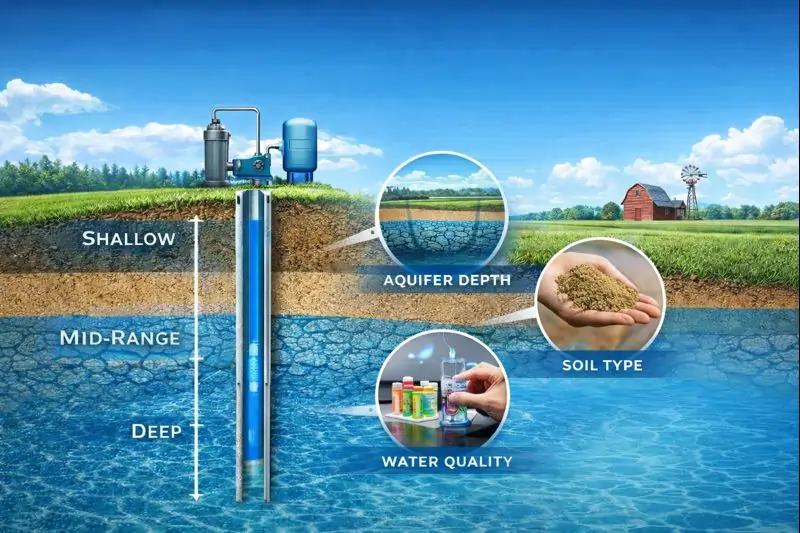
The depth of a water well depends on several key factors that vary by property and region.
Local Groundwater Depth
The most important factor is how deep groundwater exists below the surface. Some areas have shallow water tables where usable water is found within 20 to 50 feet. Other regions require drilling hundreds of feet to reach reliable aquifers.
Geology and Soil Conditions
Rock type, sediment layers, and bedrock depth all affect how deep a well must be drilled. Sand, gravel, limestone, and fractured rock allow water to flow differently than solid bedrock, which often requires deeper drilling.
Water Demand
Homes with higher water usage or multiple buildings on one well often require deeper wells to ensure sufficient supply. Agricultural or commercial wells are usually deeper than residential wells.
Water Quality Requirements
Deeper wells often provide cleaner water because they are less exposed to surface contamination. Shallow wells may be more vulnerable to bacteria, runoff, and seasonal fluctuations.
Average Water Well Depth
While depth varies widely, most residential wells fall within a general range.
- The average water well depth in many parts of the United States is between 100 and 300 feet
- Some wells may be as shallow as 25 to 50 feet
- Deep wells can exceed 500 feet in certain regions
There is no universal average that applies everywhere. Well depth maps by state or county can provide more accurate local estimates.
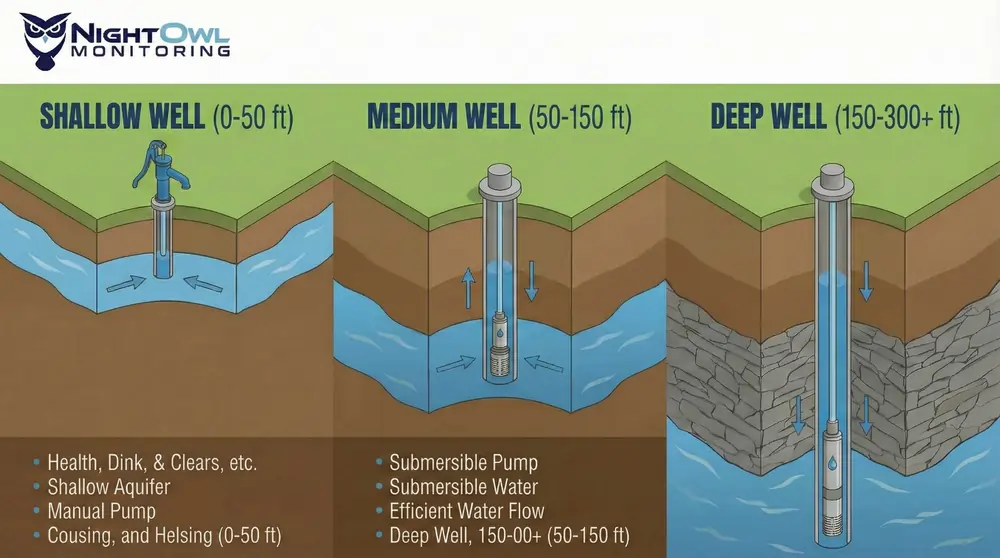
Shallow Wells vs Deep Wells
Shallow Wells
A shallow well typically draws water from near surface aquifers.
Common shallow well depths:
- 10 to 50 feet
- Sometimes up to 100 feet
Pros:
- Lower drilling costs
- Easier installation
- Faster access to water
Cons:
- Higher risk of contamination
- Seasonal water level changes
- More sensitive to drought
- Often requires more frequent testing and maintenance
Shallow wells are more common in rural or agricultural areas with high water tables.
Deep Wells
A deep well accesses groundwater from deeper aquifers below bedrock or dense soil layers.
Common deep well depths:
- 150 to 500 feet
- Some exceed 1000 feet in extreme cases
Pros:
- More stable water supply
- Lower contamination risk
- Better long term reliability
- Often better water quality
Cons:
- Higher drilling cost
- More powerful pumps required
- Greater energy usage
Deep wells are more common in areas with rocky terrain or low water tables.
How Deep Should a Well Be for Drinking Water
There is no single ideal depth for drinking water, but depth does influence safety and quality.
Most professionals recommend drilling deep enough to:
- Reach a reliable aquifer
- Avoid surface contamination
- Maintain consistent supply during dry seasons
In many regions, wells deeper than 100 feet provide better protection against bacteria and pollutants. However, even deep wells require regular testing and monitoring to ensure water remains safe.
Typical Well Depth by Region
Well depth varies significantly across the United States.
- Florida: Often shallow, typically 50 to 150 feet due to high water tables
- Texas: Wide range, often 150 to 500 feet depending on location
- Midwest: Commonly 100 to 300 feet
- Mountain regions: Frequently 300 feet or deeper
- Coastal areas: Depth depends on aquifer structure and saltwater intrusion risk
Local well records and drilling logs are the best way to estimate depth in a specific area.
How to Find Out How Deep Your Well Is
If you already have a well, there are several ways to determine its depth.
- Review original drilling or installation records
- Check county or state well logs
- Contact the original drilling company
- Measure using a well depth gauge or weighted tape
- Ask a licensed well professional to inspect the system
Knowing well depth helps with maintenance planning, pump replacement, and performance monitoring.
How Long Do Water Wells Last
A properly drilled and maintained well can last 30 to 50 years or more.
Longevity depends on:
- Construction quality
- Well depth and geology
- Maintenance frequency
- Pump and system health
- Water chemistry
Deeper wells often last longer due to reduced contamination risk and more stable aquifers.
Drilling Depth and Cost Considerations
Drilling costs typically increase with depth.
Factors that influence cost:
- Depth per foot
- Rock hardness
- Casing requirements
- Pump installation
- Electrical setup
While deeper wells cost more initially, they often provide better long term value due to reliability and reduced contamination risk.
Why Monitoring Matters for Well Depth Performance
Well depth alone does not guarantee reliability. Changes in aquifer levels, pump performance, and system pressure can occur gradually.
Monitoring systems help detect:
- Pump overuse
- Pressure fluctuations
- Changes in drawdown behavior
- Early signs of failure
NightOwl Monitoring supports proactive well management by tracking system behavior over time and identifying issues before they lead to water loss.
Signs Your Well Depth May Be a Problem
You may need professional evaluation if you notice:
- Sudden loss of water pressure
- Pump running longer than normal
- Air in water lines
- Seasonal water shortages
- Increased sediment or cloudiness
These symptoms may indicate declining water levels or system strain related to well depth.
Can a Well Be Deepened
In some cases, wells can be deepened to reach a better aquifer. This depends on:
- Existing well construction
- Local geology
- Structural integrity of casing
- Cost effectiveness
A professional assessment is required before attempting well deepening.
Final Thoughts
Water well depth plays a critical role in water quality, reliability, and system longevity. While average depths provide a general reference, every well is unique.
Choosing the right depth involves balancing water availability, quality, cost, and long term performance. Ongoing monitoring and maintenance ensure that depth related issues are detected early and managed effectively.
At NightOwl Monitoring, understanding how a well performs over time is just as important as how deep it was drilled. Early insight helps protect water supply, prevent system failure, and extend the life of residential and commercial wells.