For homeowners, farmers, and businesses that rely on private wells, water is not just a utility. It is a critical resource that supports daily life, operations, and long term property value. Yet many well owners have little visibility into what is happening below the surface. This lack of insight can lead to unexpected water shortages, pump damage, and costly repairs.
Monitoring and measuring well water levels provides essential information about how a well system is performing over time. At NightOwl Monitoring, the focus is on helping owners understand system behavior, detect early warning signs, and make informed decisions before problems escalate.
This guide explains why monitoring well water levels matters, how water level measurement works, and how consistent monitoring protects water supply, equipment, and long term reliability.
What Does Well Water Level Mean?
Well water level refers to the height of groundwater inside a well casing. It represents how much water is available at a given time and how quickly the aquifer refills after water is drawn.
Water levels naturally rise and fall due to:
- Seasonal rainfall
- Drought conditions
- Nearby water use
- Pump activity
- Aquifer health
Tracking these changes over time helps reveal trends that are not visible through occasional checks.
Why Water Level Monitoring Is Important
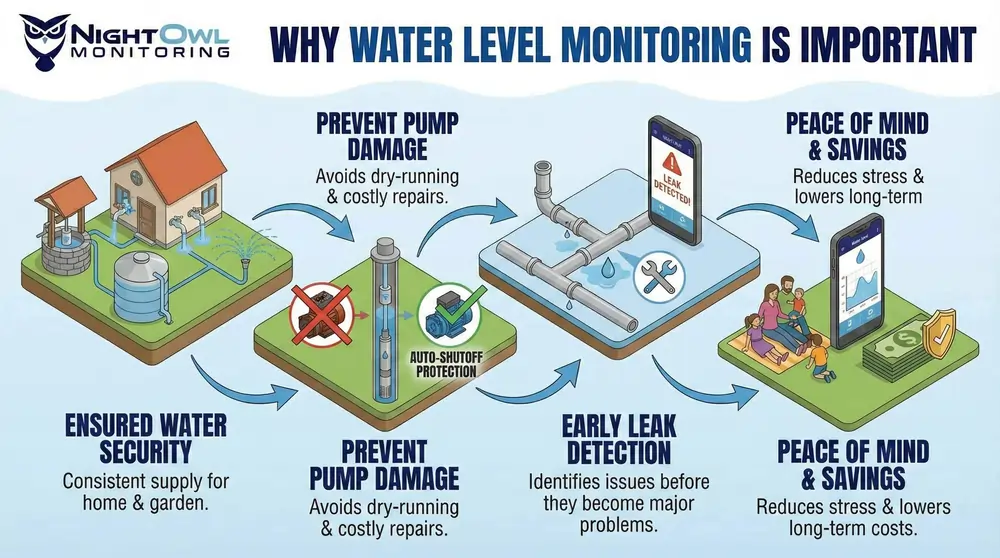
Early Detection of Water Supply Issues
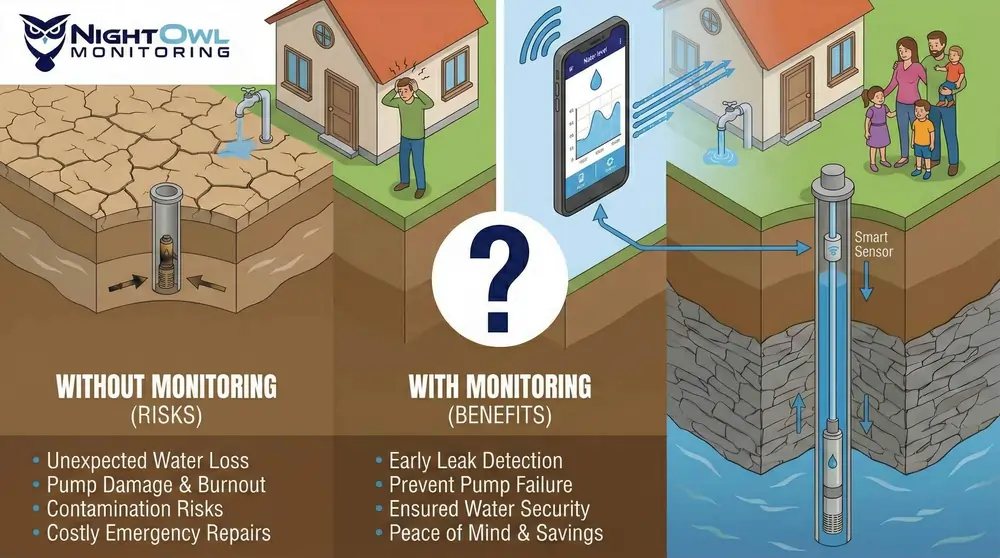
One of the most important reasons to monitor water levels is early detection. A gradual drop in water level may go unnoticed until the pump begins to struggle or runs dry. By the time symptoms appear at the tap, damage may already be occurring.
Water level monitoring allows well owners to:
- Identify declining groundwater levels
- Detect overpumping
- Recognize reduced recharge rates
- Respond before water loss occurs
This proactive insight helps prevent sudden outages and emergency repairs.
Protecting Well Pumps and Equipment
Well pumps are designed to operate within specific water level ranges. When water levels drop too low, pumps may:
- Run dry
- Overheat
- Cycle excessively
- Suffer premature wear
Measuring water levels ensure pumps are operating safely within their intended range. Protecting pumps extends equipment life and reduces replacement costs.
Understanding Water Use Patterns
Monitoring water levels alongside water usage provides valuable insight into how demand affects the well.
This data helps answer questions such as:
- How much water is being used daily
- Whether usage exceeds aquifer recharge
- If seasonal demand is stressing the system
- Whether conservation measures are effective
For agricultural or commercial users, this information is critical for planning and compliance.
Supporting Long Term Well Sustainability
Groundwater is a shared resource. Excessive drawdown can impact neighboring wells and local aquifers. Water level monitoring supports responsible use by providing data that helps balance demand with natural replenishment.
Long term monitoring helps:
- Maintain aquifer health
- Reduce environmental impact
- Support sustainable water management
- Protect future water availability
Why Measuring Water Quality Also Matters
Water level data works best when combined with water quality testing. Changes in water level can influence water quality by:
- Drawing water from different aquifer zones
- Increasing sediment or mineral content
- Introducing contaminants during low water conditions
Understanding why it is important to measure water quality alongside water levels helps ensure water remains safe and usable.
Together, these measurements provide a complete picture of well system health.
How Water Level Measurement Works
Manual Measurement Methods
Traditional water level measurement often involves manual tools such as:
- Weighted tapes
- Electric water level meters
- Sounding devices
While effective, these methods provide only occasional snapshots. They rely on scheduled checks and may miss sudden changes.
Automated Water Level Monitoring Systems
Modern water level monitoring systems use sensors installed inside the well to collect continuous data. These systems track changes in real time and store historical trends.
Benefits of automated monitoring include:
- Continuous measurement
- Remote access to data
- Alerts for abnormal changes
- Reduced need for manual inspections
At NightOwl Monitoring, system awareness and early detection help transform raw data into actionable insight.
What Is Hydrologic Data and Why It Matters
Hydrologic data refers to information about how water moves through the environment. In well systems, this includes groundwater levels, recharge rates, and drawdown behavior.
Understanding hydrologic patterns helps:
- Predict drought impacts
- Plan water usage
- Identify stress on aquifers
- Improve long term water management
Water level monitoring contributes directly to hydrologic understanding at both local and regional levels.
How to Use Water Level Data Effectively
Monitoring alone is not enough. The real value comes from interpreting trends and responding appropriately.
Well owners can use water level data to:
- Adjust pump settings
- Reduce water use during low recharge periods
- Schedule maintenance proactively
- Plan system upgrades
- Evaluate the need for well deepening or rehabilitation
Clear data supports confident decision making.
Common Problems Prevented by Water Level Monitoring
Consistent monitoring helps prevent:
- Sudden loss of water
- Pump burnout
- Reduced water pressure
- Sediment intrusion
- Well collapse
- Costly emergency service calls
Many of these problems develop slowly and can be addressed early with the right insight.
Who Benefits Most from Monitoring Well Water Levels?
Water level monitoring is valuable for:
- Homeowners on private wells
- Agricultural operations
- Commercial facilities
- Community water systems
- Drilling and service companies
- Property managers
Anyone who depends on consistent water supply benefits from understanding system behavior.
How Monitoring Supports Preventive Maintenance
Preventive maintenance is far more cost effective than reactive repair. Water level data helps identify when maintenance is needed rather than relying on guesswork.
This approach:
- Reduces downtime
- Extends equipment life
- Improves reliability
- Lowers long term costs
NightOwl Monitoring supports this proactive mindset by turning data into early warnings.
When to Start Monitoring Your Well
The best time to start monitoring is before problems appear. New wells benefit from baseline data that establishes normal behavior. Older wells benefit from identifying age related changes.
Monitoring is especially important if:
- Water use has increased
- Drought conditions exist
- Nearby wells are being drilled
- Pressure or flow changes are noticed
Final Thoughts
Monitoring and measuring well water levels is not just a technical task. It is a practical step toward protecting water supply, equipment, and peace of mind.
By understanding how water levels change over time, well owners gain control instead of reacting to failures. When combined with quality monitoring and early detection tools, water level data becomes a powerful asset.
At NightOwl Monitoring, the goal is to support reliable performance through insight, awareness, and prevention. Measuring water levels is one of the most effective ways to ensure long term well system health.